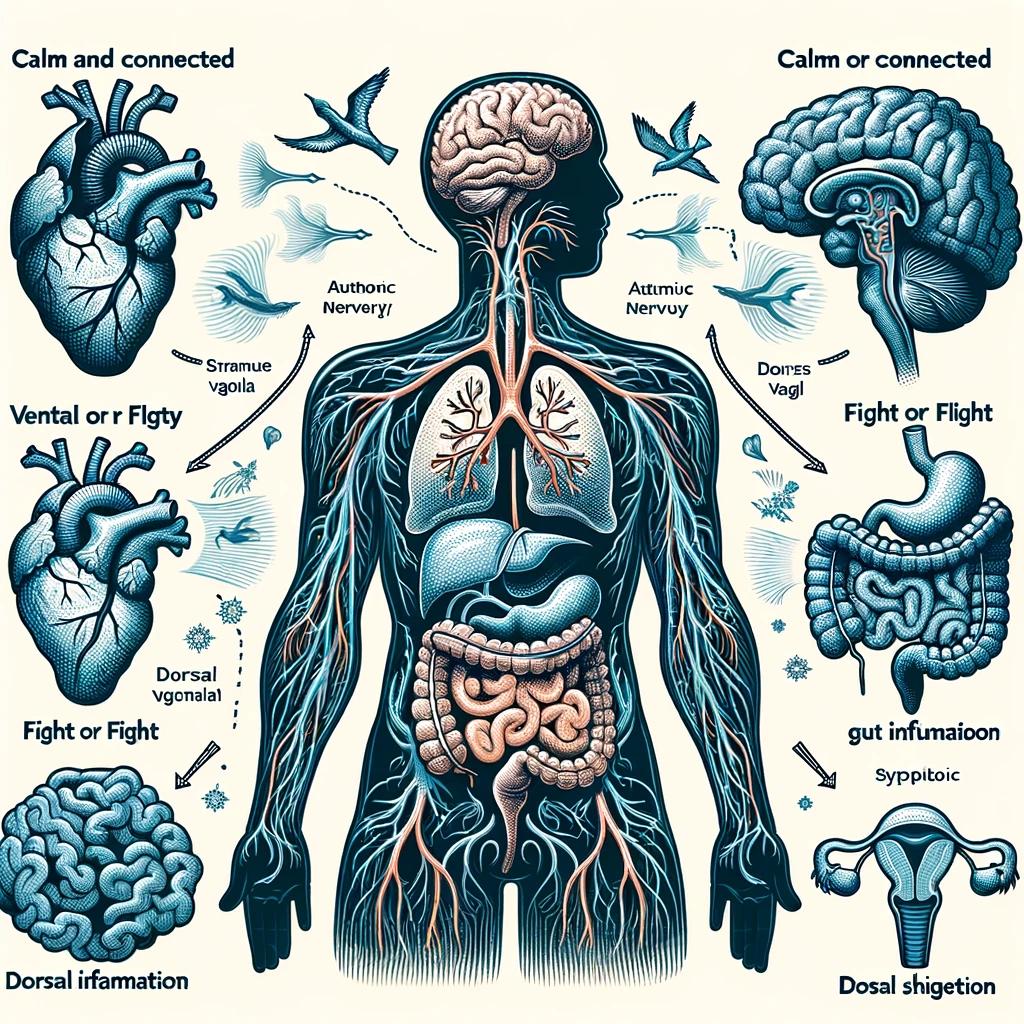
The relationship between the brain and the gut has fascinated researchers and health enthusiasts alike for decades. Polyvagal Theory, developed by Dr. Stephen Porges, provides a unique lens to understand this connection. By exploring how our nervous system interacts with our digestive system, Polyvagal Theory helps us see why our gut health is deeply intertwined with our emotional and physical well-being.
What is Polyvagal Theory?
Polyvagal Theory revolves around the vagus nerve, the longest cranial nerve that extends from the brainstem to the heart, lungs, and digestive tract. This theory proposes that the vagus nerve plays a crucial role in regulating the autonomic nervous system, which governs involuntary bodily functions such as heart rate, digestion, and respiratory rate.
The theory identifies three primary states of the autonomic nervous system:
- Ventral Vagal State (Social Engagement): When we feel safe, connected, and at ease, the ventral vagal system is active. This state supports healthy digestion, social connection, and a sense of calm.
- Sympathetic State (Fight or Flight): This state is activated in response to perceived threats, leading to increased heart rate, heightened alertness, and the suppression of non-essential functions like digestion.
- Dorsal Vagal State (Shutdown or Freeze): This state is activated in extreme stress or trauma, leading to withdrawal, numbness, or feelings of dissociation. Digestive function can slow down or even shut off in this state.
Polyvagal Theory emphasizes that our body’s response to stress is not just a mental experience but also a physiological one, directly impacting our organs, including the gut.
How Polyvagal Theory Relates to Gut Health
The gut-brain connection, also known as the gut-brain axis, highlights the bidirectional communication between the central nervous system and the digestive system. Here’s how Polyvagal Theory explains this connection:
- Vagus Nerve and Gut Function: The vagus nerve plays a key role in regulating gut motility (how stuff moves through your intestines), inflammation, and the secretion of digestive enzymes. When the ventral vagal system is active, it promotes healthy digestion, reduces inflammation, and fosters a balanced gut microbiome. Conversely, when we are stressed, the sympathetic or dorsal vagal states can inhibit these functions, leading to issues like bloating, constipation, or indigestion.
- Stress and Digestive Disorders: Chronic stress and anxiety can disrupt the normal function of the gut. For example, individuals with Irritable Bowel Syndrome (IBS) often experience heightened gut sensitivity and dysregulation, which can be explained through Polyvagal Theory. When the body perceives stress, it shifts away from the ventral vagal state, affecting digestive function and exacerbating symptoms.
- Microbiome and Mood: The gut houses trillions of microorganisms that play a critical role in producing neurotransmitters like serotonin, which influences mood and emotional regulation. Polyvagal Theory suggests that when the vagus nerve is stimulated (such as through breathing exercises or social engagement), it can positively influence gut bacteria, leading to improved mood and digestion.
- Inflammation and Immune Response: The vagus nerve has anti-inflammatory properties, helping regulate the body’s immune response. When the ventral vagal system is active, it signals the body to reduce inflammation, supporting gut health. In contrast, chronic activation of the sympathetic or dorsal vagal states can increase inflammation, contributing to conditions like leaky gut or autoimmune disorders.
Enhancing Gut Health Through Polyvagal Theory
Understanding Polyvagal Theory can empower us to take steps that not only soothe our nervous system but also improve our gut health. Here are some practical strategies:
- Mindful Breathing: Deep, slow breathing activates the vagus nerve, promoting a state of calm and enhancing digestion. Practices like diaphragmatic breathing or the “4-7-8” technique can help shift the body into a ventral vagal state.
- Social Connection: Engaging in positive social interactions can stimulate the ventral vagal state, promoting relaxation and supporting gut health. Simple acts like hugging, laughing, or even chatting with a friend can make a difference.
- Cold Exposure: Techniques like cold showers or splashing cold water on the face can stimulate the vagus nerve, improving vagal tone and supporting digestive function.
- Yoga and Meditation: Yoga, particularly poses that involve gentle twists or abdominal massages, can enhance vagal tone and support digestive processes. Meditation, especially mindfulness or loving-kindness meditation, can also activate the ventral vagal state.
- Nutrition: Eating a diet rich in prebiotics, probiotics, and anti-inflammatory foods supports a healthy gut microbiome. Since gut health directly impacts the vagus nerve, a balanced diet can improve overall well-being.
Conclusion
Polyvagal Theory provides a comprehensive framework for understanding the intricate relationship between our nervous system and gut health. By recognizing the impact of stress and emotional states on our digestive function, we can take proactive steps to foster a healthier gut and a more balanced nervous system. Integrating practices that enhance vagal tone can lead to better digestion, reduced inflammation, and improved emotional resilience, highlighting the profound connection between our brain, body, and gut.
If you’re ready to explore a yoga practice that’s tailored to your unique needs, consider working with me. Whether you’re seeking physical healing, emotional balance, or a deeper connection to yourself, a personalized approach can help you find the right path. Reach out to a via e-mail to Evon@A-Path-To-Balance.com today and discover the power of a practice designed just for you. Your journey to a healthier, more balanced you starts now!





0 Comments